
How to Evaluate Qwen4-Max: Access, Cost and Coding Tests (November 2026)
Published · 11 min read
Start with the released model ID qwen4-max on a provider that lists it in your region. Compare it with your current model on the same tasks, tools and acceptance criteria. Record successful outcomes, total tokens, retries and elapsed time. The published benchmarks and launch prices help you choose what to test; they do not predict your own results.
In this article
A practical way to decide whether Qwen4-Max fits your coding and agent workflows, and what to check before changing your setup.

What is Qwen4-Max and how is it different from the preview?
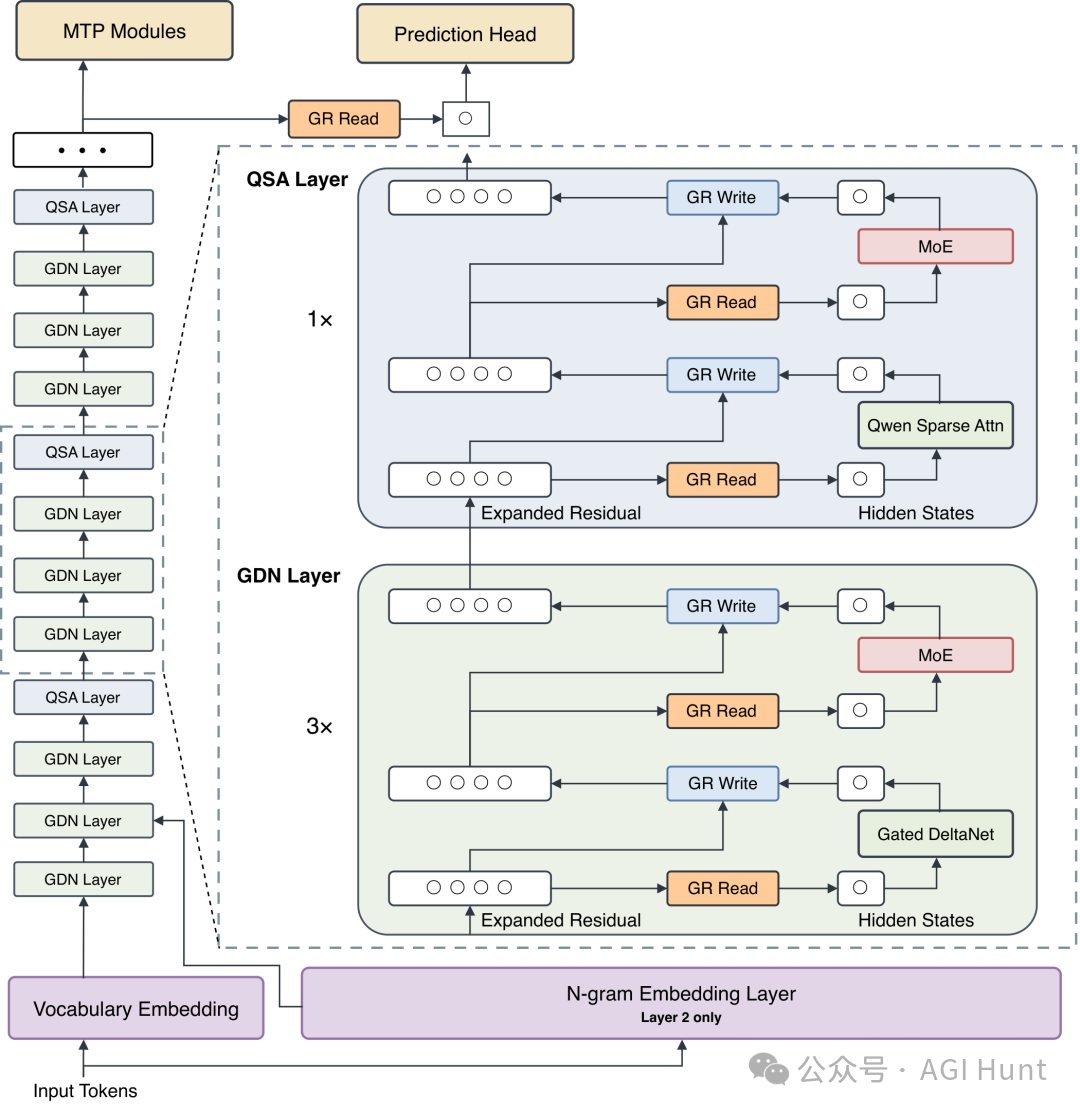
Qwen4-Max is Alibaba's first released Qwen 4 model, announced on November 16, 2026. Alibaba describes a sparse mixture-of-experts model with native visual input and a one-million-token context window. Its documentation lists the released model as qwen4-max.
The earlier qwen4-max-preview has separate terms: Alibaba's preview documentation describes Token Plan access and a preview ending November 25 at 24:00 UTC+8. Do not assume those restrictions, limits or identifiers carry over to a released model on another platform. Check the exact model and region before configuring a client.
The reported architecture has a 2.4T-parameter backbone with 71B active per token. Those figures help identify the model but do not determine quality on your task. The same applies to context size: a large input capacity is useful only if the model can locate, interpret and act on the information you provide.
Where can you access Qwen4-Max?
Alibaba announced access through QwenCloud and its applications, including Qwen Studio, QwenWork and Qoder. For API use, check the provider's current model list, regional availability, authentication method and billing terms. Some documentation may lag a same-day launch.
- Choose a provider and confirm that it lists the released model in your region.
- Confirm the exact model ID and the endpoint and API key required by that provider.
- Send a small text request and inspect the returned model name, usage and any error message.
- Only then test tool calling, images or long context if your workflow needs them.
Do not assume that a provider supports every capability in Alibaba's model documentation. In particular, SiAPI.ai availability and its model ID must be checked in the live catalog.
Review the SiAPI.ai model catalog and current plans and API prices. Verify the listed model and its terms before purchase.
How much should you budget?
The launch reports $1.50 per million input tokens, $4.50 per million output tokens and $0.075 per million implicit-cache tokens. These are announced provider rates as of November 16, not a quote for every region or gateway.
| Example | Calculation | Estimated model charge |
|---|---|---|
| Uncached input | 1M input × $1.50 + 0.2M output × $4.50 | $2.40 |
| All example input billed at cache-hit rate | 1M cached input × $0.075 + 0.2M output × $4.50 | $0.975 |
These examples exclude taxes, subscriptions, tool charges and provider-specific fees. Cache hits are not guaranteed. Include reasoning output, retries and failed attempts in your own calculation where the provider bills them.
Track the cost of the result, not just the request
Create a simple ledger for each attempt: input tokens, cached input tokens, output tokens, number of tool calls, duration, billed amount and reviewer decision. If a run fails, keep its cost in the total. If a person must repair an answer, record that time separately so the cheapest-looking model does not win simply by shifting work to the reviewer.
Which benchmarks are useful for your decision?
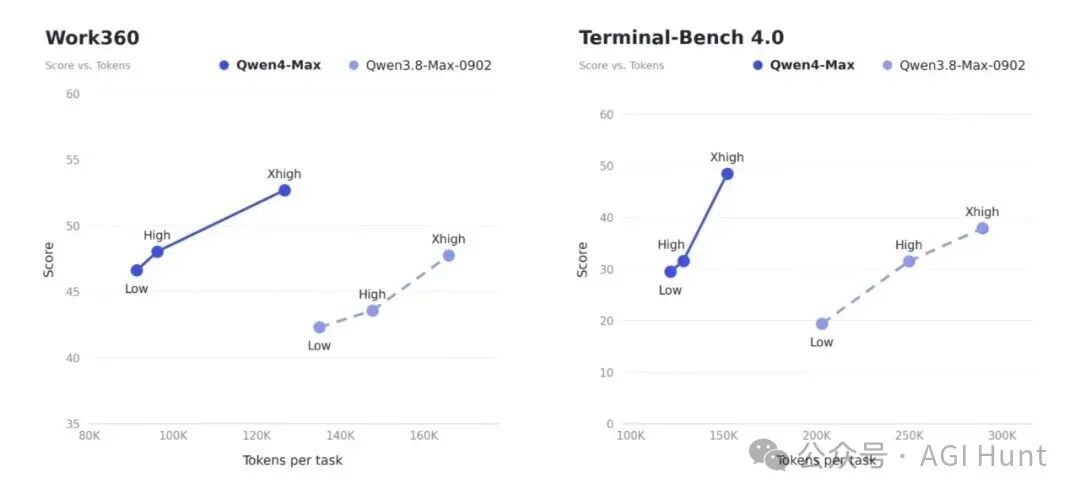
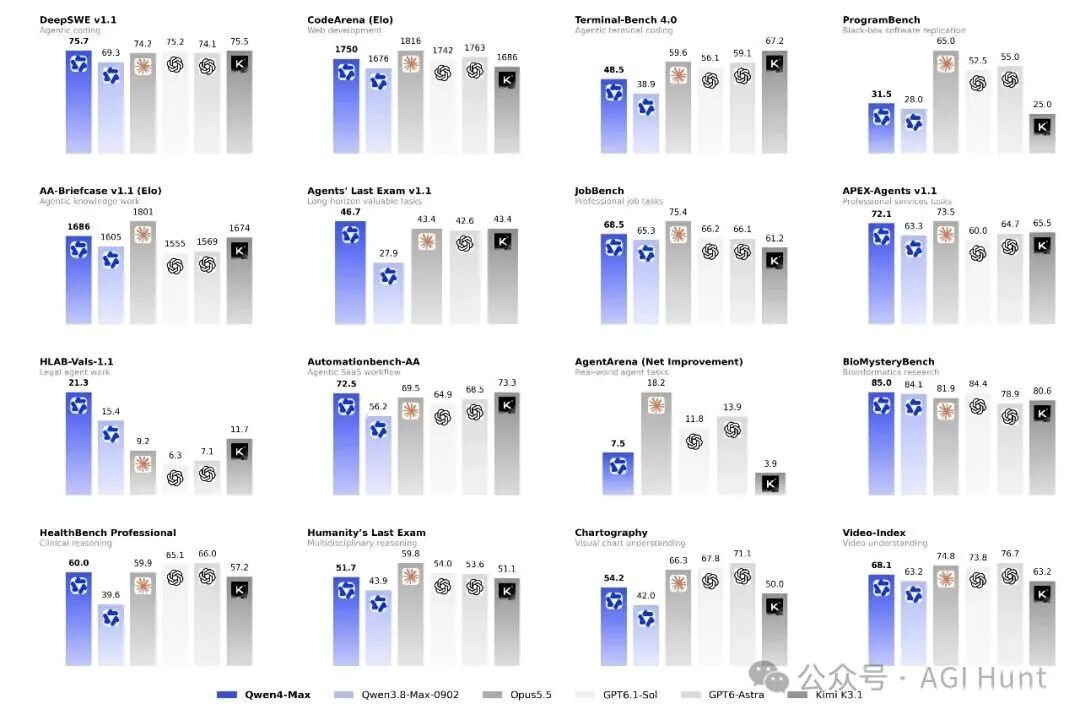
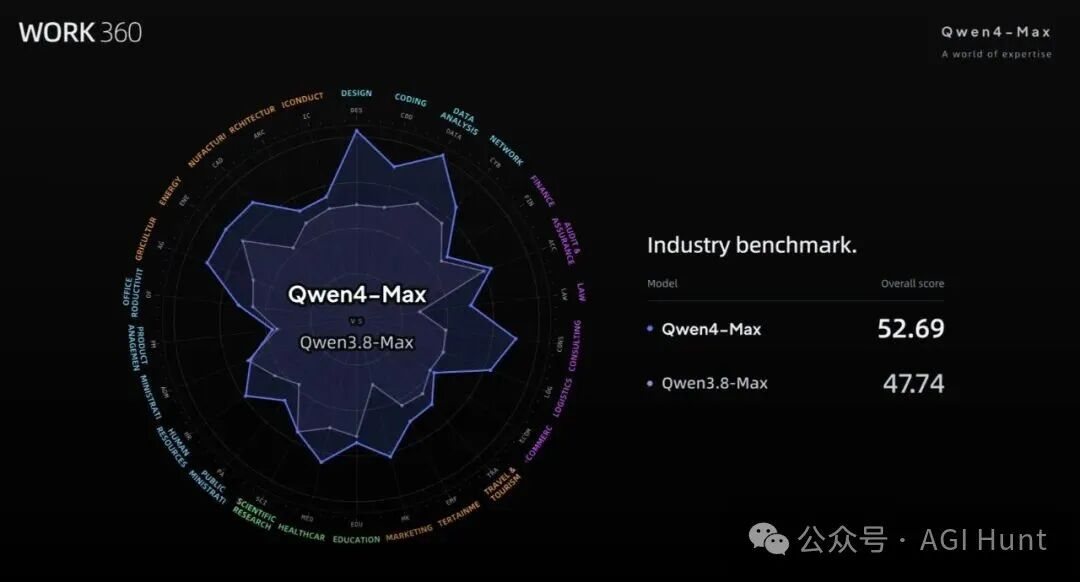
Use the launch comparison to pick test categories, not to declare a universal winner. Alibaba reports strong results on DeepSWE v1.1 and Agents' Last Exam v1.1, while the same table shows weaker results relative to named competitors on Terminal-Bench 4.0 and ProgramBench. Work360 is an Alibaba-designed benchmark, so its results need the same scrutiny as other vendor tests.
| Your work | Representative test | Pass condition |
|---|---|---|
| Repository changes | Fix a real issue with existing tests | Tests pass and a reviewer accepts the patch |
| Terminal agent | Diagnose and repair a broken build in an isolated copy | Build succeeds without unrelated changes |
| Long documents | Find facts near the start, middle and end; include a conflicting revision | Correct facts and dates, with uncertainty flagged |
| Visual work | Implement a small interface from a reference | Reviewer checks layout, behavior and accessibility |
How do you run a fair comparison?
- Choose 10 to 20 tasks from real work and write a pass/fail rubric before running them. Remove sensitive information or use an approved environment.
- Give each model the same task, repository snapshot, tool access and time limit. Record any differences in reasoning settings or context limits.
- Repeat representative tasks, because one run may be lucky or unlucky. Keep failures and retries in the results.
- Have a reviewer score the final output without relying on the model's self-assessment. Record completion rate, elapsed time, tokens and total cost per accepted result.
- Inspect failure patterns before switching. A lower bill per request may still mean a higher bill per accepted task if retries increase.
For example, if ten attempts cost $12 in total and six pass review, the cost per accepted task is $2. This is an evaluation method, not a measured Qwen4-Max result.
Make the evaluation repeatable
Save the task prompt, repository commit, tool versions, model identifier, reasoning settings and run timestamp with each result. Set a maximum number of attempts in advance. For code, run the same test suite for each candidate and review the diff for changes outside the requested scope. For spreadsheets or reports, inspect the underlying formulas and citations, not just the appearance of the final file.
When models fail in different ways, classify the failure: misunderstood requirement, incorrect tool call, failed recovery, fabricated detail or incomplete delivery. That breakdown tells you whether a prompt change is likely to help or whether the model is a poor fit for the task.
Use a small scoring sheet
| Measure | Record for each task | Why it matters |
|---|---|---|
| Acceptance | Pass, fail and reviewer notes | Measures usable output |
| Reliability | Attempts and repeated-run outcomes | One successful demo can hide failures |
| Cost | All billed usage and retries | Shows cost per accepted result |
| Time | Elapsed time and human review time | Captures waiting and rework |
| Safety | Unexpected changes and approval bypasses | Shows whether the workflow can be controlled |
How should you test long-running agents?
Give the agent a bounded objective and a way to recover: a test environment, checkpoints, a maximum spend and a human approval step before consequential actions. Check whether it follows the task after interruptions, handles a failed tool call and reports what it changed. Track time spent reviewing or repairing its work as well as generation time.
For long context, place relevant facts in different positions and add a later correction. Ask the model to identify which version applies. A one-million-token limit describes capacity; reliable recall, latency and cost require separate measurement.
How can you turn the launch demos into your own tests?
The launch demonstrations cover several domains. Shrink each one to a task your team can assess in a day. A reliable small test is more informative than trying to reproduce an entire promotional demo.
| Demonstration | Small evaluation task | What to inspect |
|---|---|---|
| 3D and games | Build a small interactive scene from a written brief | Runnable output, camera, controls and visual match |
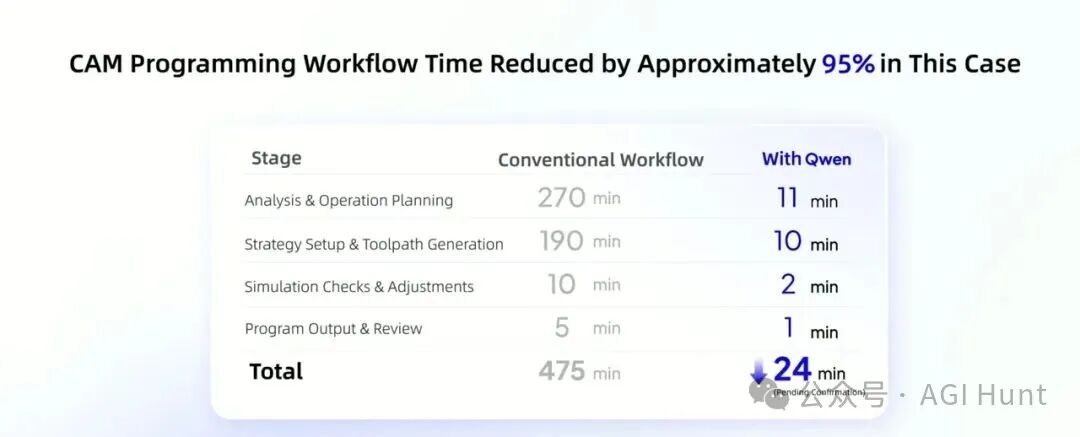
| Manufacturing | Convert a sample layout into a simulation-ready model | Dimensions, constraints and simulation errors |
| Research | Search a fixed set of papers and propose testable candidates | Traceable citations and expert validation |
| Finance | Build a workbook and chart from a known dataset | Formula accuracy and source-to-chart traceability |
| Legal documents | Summarize a small, approved document set | Correct citations and missing or conflicting clauses |
| Medical records | Use synthetic data for a structured extraction exercise | Factual correspondence; clinician review remains essential |
These are proposed evaluation exercises, not results from our own tests. For regulated decisions, arrange qualified human review and use only data you are authorized to process.
What should you do when a test fails?
First confirm the model ID and provider region. Then separate an access error from a task failure: check credentials and quota for authentication or rate-limit errors; inspect the request format for unsupported parameters; and review the tool logs when an agent stops mid-task. Keep the original failing case, change one variable at a time and rerun it.
If output is truncated, check the configured output limit and whether reasoning shares that budget. If a long-context answer misses a fact, reduce the input and test retrieval before assuming the whole window is reliable. For unexpected costs, compare billed usage with cache-hit records and include retries.
Should you switch from your current model?
Switch only if the model meets your acceptance threshold on the tasks that matter and the full cost is acceptable. For mixed workloads, keep your existing model as a fallback and route only suitable tasks to the new one. A week-long trial can start with setup and a baseline on day one, run coding and tool tasks on days two and three, examine long-context and visual tasks on day four, and reserve day five for review and cost analysis.
A five-day evaluation schedule
| Day | Work | Deliverable |
|---|---|---|
| 1 | Confirm access and collect representative tasks | Model IDs, task set and acceptance rubric |
| 2 | Run coding tasks on both models | Test results, diffs and usage logs |
| 3 | Test tool use, recovery and long-running work | Tool traces and failure categories |
| 4 | Test long inputs and visual tasks where relevant | Recall checks and reviewed outputs |
| 5 | Review quality, total costs and operational limits | Decision with fallback and rollout scope |
Adjust the sample size to the consequences of errors. A small trial can reject an obvious mismatch, but it cannot establish production reliability for every workload.
Frequently asked questions
Is Qwen4-Max open source?
Qwen4-Max itself is not open source according to the launch materials. Alibaba says smaller Qwen 4 models with open weights are planned; release timing and licenses should be checked when they are published.
Are the announced token savings guaranteed?
No. Alibaba's reported savings are tied to particular benchmarks and thinking settings. Your results depend on the task, tool calls, caching and retries.
Can I use the preview model ID for the released model?
Do not assume they are interchangeable. The preview is qwen4-max-preview; Alibaba Cloud lists the released model as qwen4-max. Use the ID shown by your provider.
Does SiAPI.ai offer the released model?
Confirm the current listing in the SiAPI.ai model catalog. This guide does not assert that the released model is available there.