
GLM-5.3 vs GPT-6.2 Sol: Two Ways To Cut Daily Agent Costs
Published · 5 min read
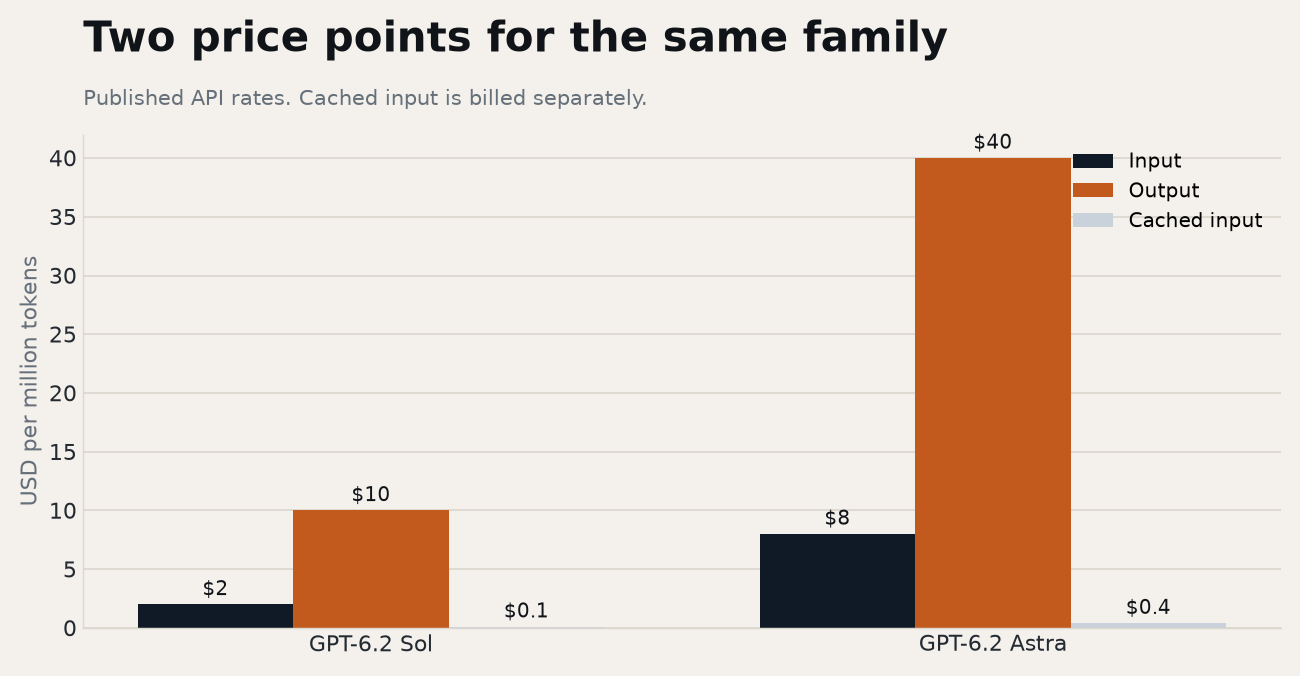
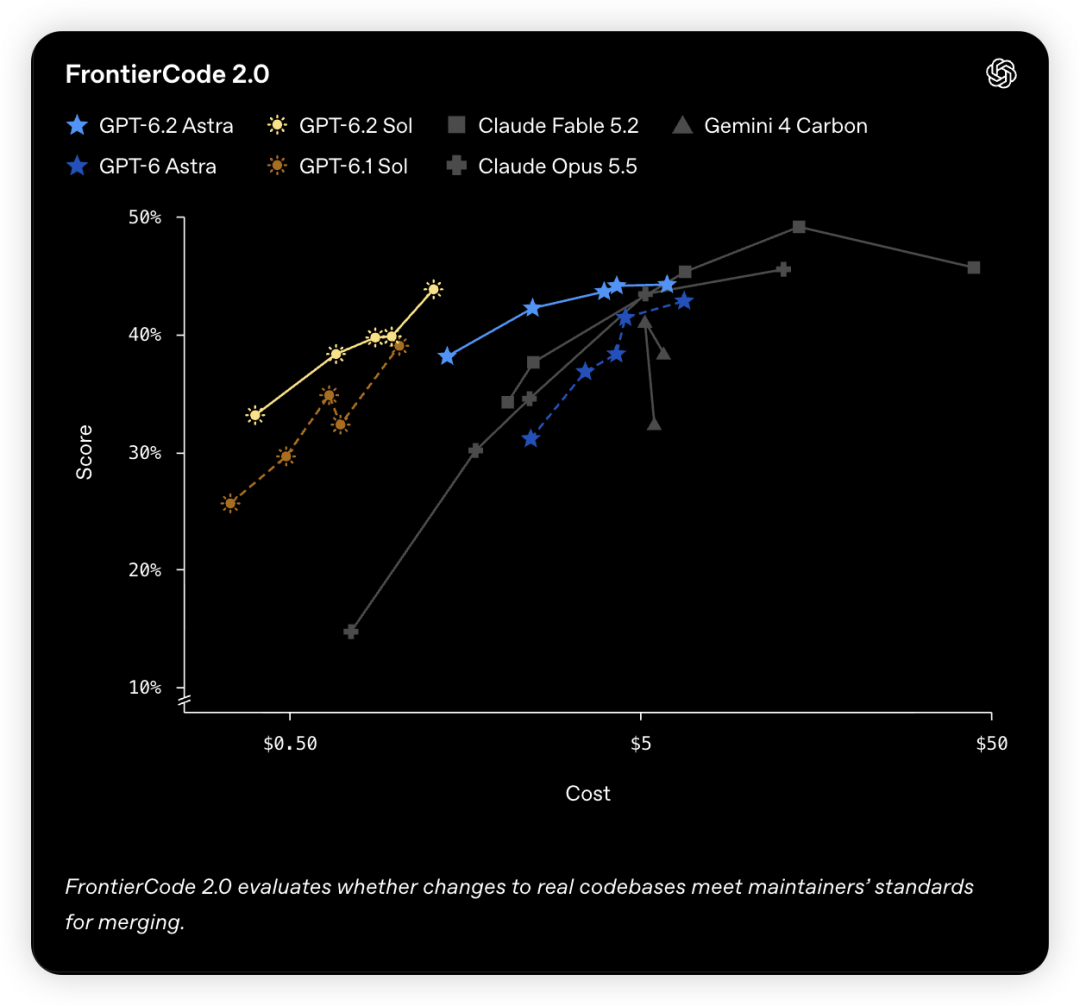
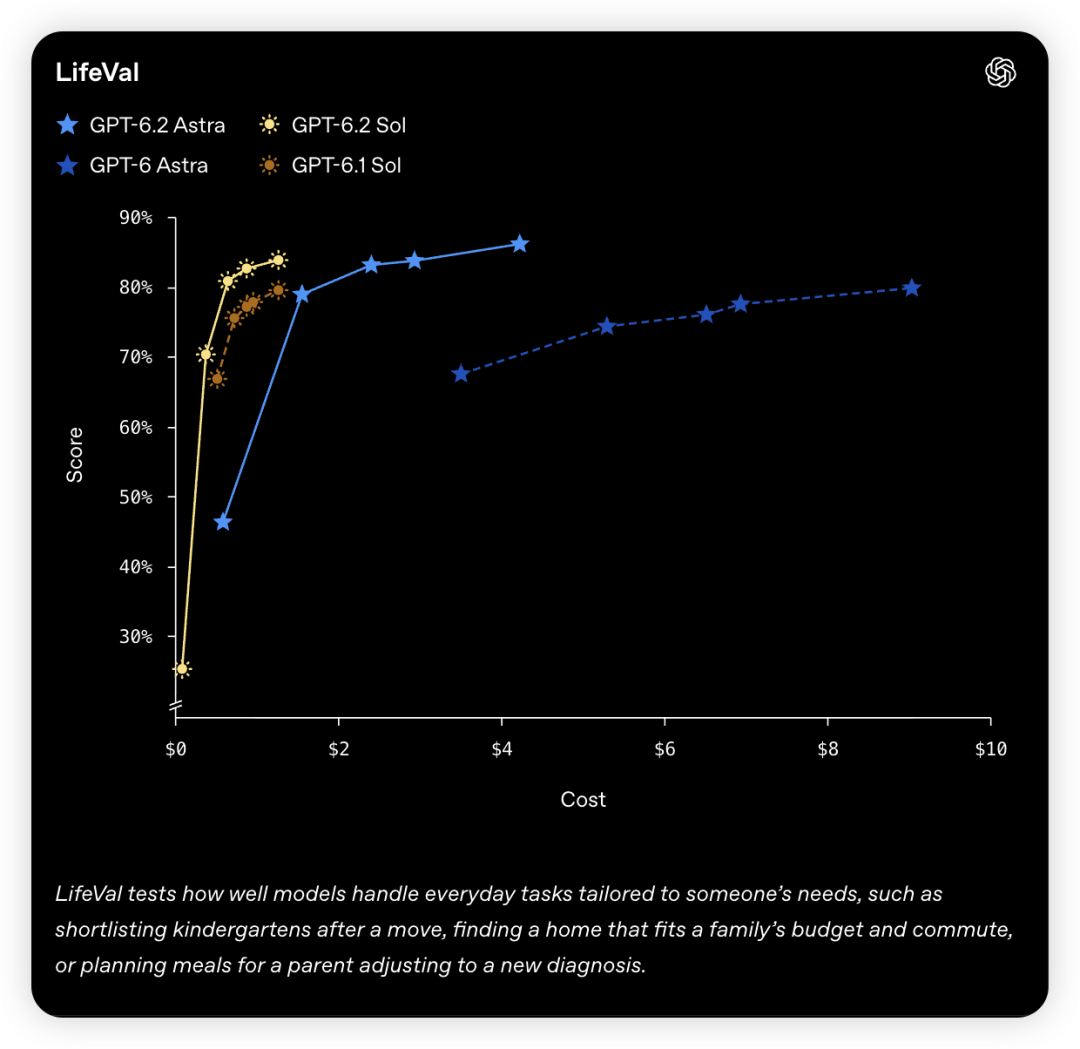
GPT-6.2 Sol keeps the previous Sol API price at $2 per million input tokens and $10 per million output tokens. On FrontierCode 2.0 it scores 43.8% at max effort against 44.2% for GPT-6.2 Astra, at about one fifth of Astra's task cost. LifeVal puts it at 83.8%, above the older GPT-6 Astra at 79.8% and roughly one seventh of the cost. GLM-5.3 goes the other way: a 1M-token text context, reasoning that cannot be switched off, and an implicit cache that bills repeated prefixes at about half rate.
In this article
Two directions to a smaller bill
Both models sell to the same developer: someone running agent jobs all day and watching the cost per call add up. They reach that buyer from opposite ends. Sol keeps the old Sol price and pushes quality toward the flagship. GLM-5.3 keeps a very large context and a forced reasoning step, then makes repeated input cheaper.
The shape of the workload decides which saving arrives first. A pipeline that sends short, different prompts every time benefits from a lower unit price. A pipeline that sends the same long prefix with a new question at the end benefits from a cache.
What Sol keeps: the old rate, fewer tokens
OpenAI did not raise the API rate for GPT-6.2 Sol. It stays at $2 input and $10 output per million tokens, a quarter of GPT-6.2 Astra. The gap in output quality is small on some tasks. FrontierCode 2.0 asks the model to change a real codebase and meet the bar a maintainer would merge. At max reasoning effort, Sol scores 43.8% and Astra 44.2%, a difference of 0.4 points, while Sol's task cost is about one fifth of Astra's.
Everyday tasks show a wider gap in Sol's favor. On OpenAI's LifeVal set, which covers things like choosing a school after a move, weighing commute against rent, and planning meals around a dietary restriction, Sol reaches 83.8%. The previous flagship, GPT-6 Astra, reaches 79.8%, at about seven times the cost.
OpenAI says many employees already use Sol as their default model for technical and non-technical work. The model ships through the API and Codex, and through ChatGPT Work for Plus, Pro, Enterprise, and Edu accounts. It is not in the regular ChatGPT chat picker. Ultrafast mode opens to $200 Pro subscribers first, with Sol included at launch.
The price is only part of the saving. OpenAI says the new models plan better, so they spend fewer tokens on retries and tool calls. On GDPval v2, GPT-6.2 Astra produced 22% fewer output tokens than the previous model. A smaller token count lowers the bill at any rate, and Sol comes from the same generation, so the planning work applies to it as well.
What GLM-5.3 assumes: a long thread, a paid thought
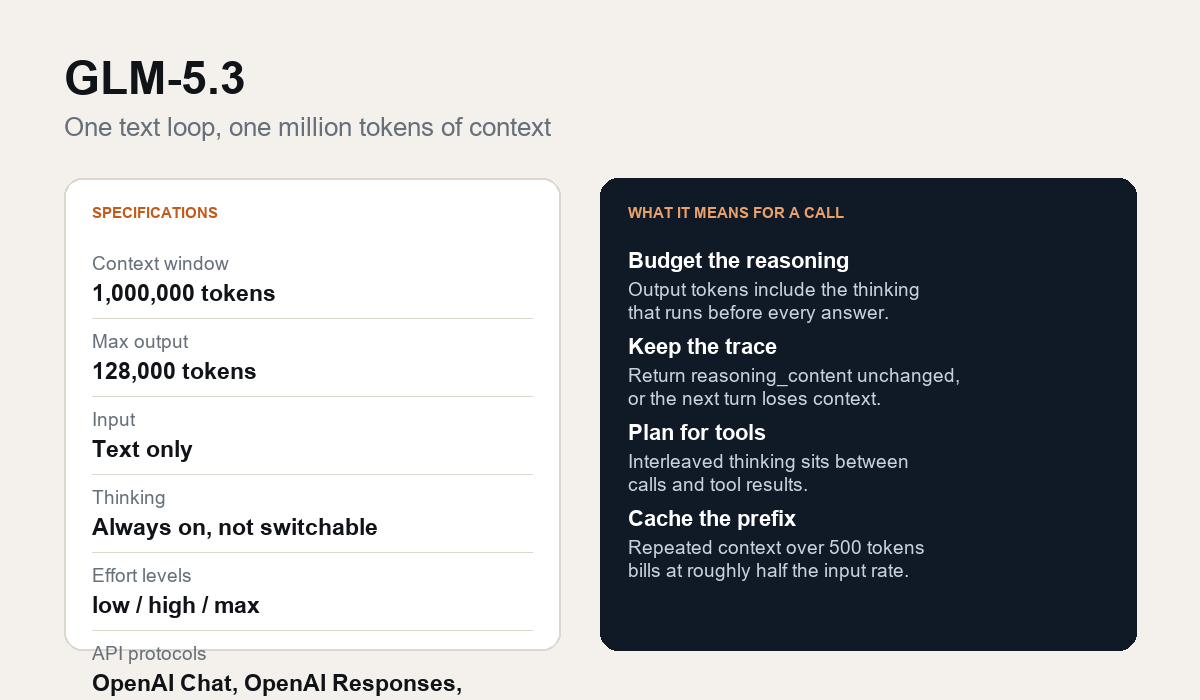
GLM-5.3 is built for the opposite shape. The context window is 1M tokens, output tops out at 128K, and input is text only. Thinking cannot be disabled: the API accepts thinking.type: "enabled", and a request that passes disabled fails. Effort runs low, high, or max, with max as the default.
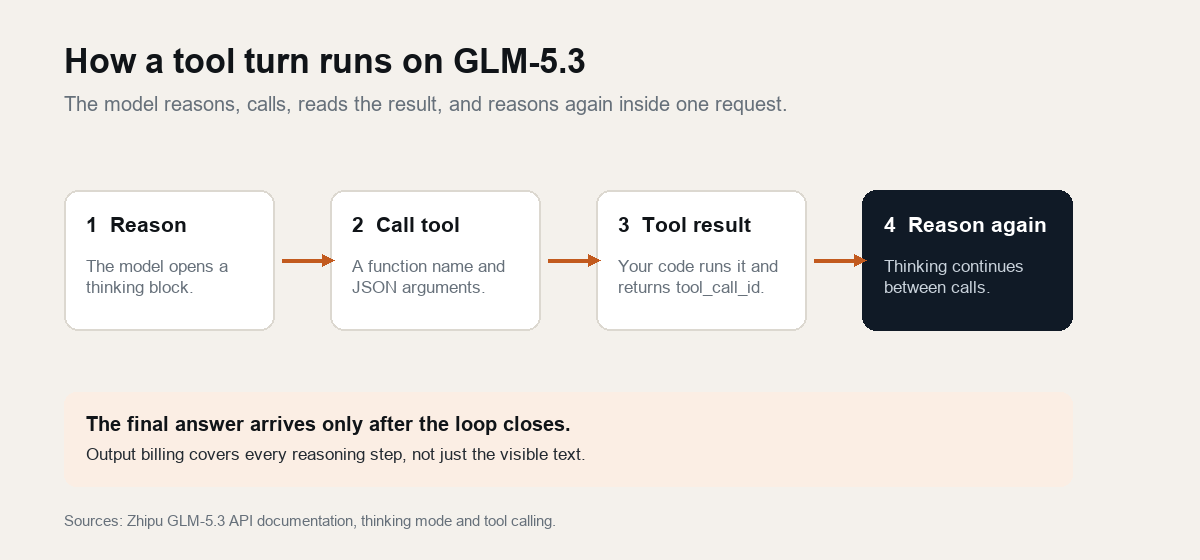
Interleaved thinking lets the model reason between tool calls and after a tool result. Preserved thinking keeps earlier reasoning in context, which improves cache hits but requires the caller to return reasoning_content byte for byte. Turn-level thinking lets one conversation switch the setting between turns. The cache itself is implicit. A repeated prefix of roughly 500 tokens or more is billed at about half the normal input rate, and usage.prompt_tokens_details.cached_tokens reports the match.
The model speaks OpenAI Chat Completions, OpenAI Responses, and Anthropic Messages, so an existing client can switch with a base URL and a model name. A flash variant trades some capability for latency on high-concurrency work.
The bill: unit price against reuse
| Dimension | GLM-5.3 | GPT-6.2 Sol |
|---|---|---|
| Input price | Not stated in the material used here | $2 per million tokens |
| Output price | Not stated in the material used here | $10 per million tokens |
| Cache | Implicit, about half price, 500+ token prefix | Discounted cached input, stable prefix recommended |
| Context window | 1M tokens | Not stated in the material used here |
| Maximum output | 128K tokens | Not stated in the material used here |
| Thinking | Always on, low / high / max | Reasoning effort selectable |
| Modality | Text input only | Text and agent tooling through Codex |
Sol lowers two numbers at once: the price of a token and the number of tokens a task needs. The second one is easy to miss. A model that plans better calls fewer tools and wastes less output on retries, so the queue finishes on a smaller bill even at the same rate.
GLM-5.3 lowers a different number. A long, stable prefix costs about half as much per input token when it repeats, and the 1M-token window removes some of the chunking and retrieval work that would otherwise sit in front of the model. The trade-off is that every call pays for reasoning, so a long conversation with short turns can cost more than the rate card suggests.
The loop: who holds the tool calls
GLM-5.3 exposes the loop. Function calling follows the OpenAI schema, tool_choice lists auto, tool_stream can stream arguments, and every tool message must carry the matching tool_call_id. Interleaved thinking keeps the reasoning before and after a tool result in the same turn. When a search tool returns results, the response also carries a web_search field. Permission checks, execution, and error handling stay in your code.
Sol works inside OpenAI's agent surfaces. Codex handles code changes, and the GPT-6.2 family covers computer operation, browser interaction, and 3D scene generation. For API users, OpenAI recommends keeping the prompt prefix stable and appending new instructions, which is the same discipline the GLM prefix cache rewards.
Control sits in different places. With GLM, the application owns the loop and sees every step. With Sol, the harness owns more of the workflow, and the application sees the calls that cross the boundary.
Where Sol stops
Sol is not Astra. The 0.4-point FrontierCode gap is small, but that test runs both models at max effort, and the hardest tasks still separate them. Sol also stays out of the regular ChatGPT chat interface, which matters to teams that expect a consumer surface. Its strength is the middle of the distribution: routine code changes, document work, and the agent jobs that fill most of a queue.
Which workload pays less
GPT-6.2 Sol fits high-volume coding and office work where the quality bar is a merged pull request or a usable document, not a frontier result. The unchanged rate and the smaller token footprint make it easy to leave running. Teams already inside Codex or ChatGPT Work have the shortest setup path.
GLM-5.3 fits text pipelines with a stable long prefix: a repository that stays open for hours, a document set that repeats across questions, or an extraction job that needs do_sample set to false for repeatable output. The 1M-token window replaces some retrieval layers, and the half-price cache rewards the same prefix discipline OpenAI recommends.
Neither model is cheaper in general. One wins when the prompt changes every call; the other wins when the context repeats.
For cache-heavy text work, GLM-5.3 is the direct way to test the pattern. SiAPI.ai lists it on a recurring Coding Plan, so the same key can run GLM next to the models already in a stack.
Current terms are on the GLM-5.3 plan page.