
Claude, Lean and the Riemann Hypothesis: Inside the Verified Proof
Published · 7 min read
The Lean and Mathlib communities have certified the correctness of Levent Alpöge’s formal Riemann Hypothesis proof. Alpöge describes the work as a collaboration with Claude. The certification establishes formal correctness; explaining the argument and any prize decision remain separate matters.
In this article
From an extraordinary claim to a checkable result
When Levent Alpöge released a vast Lean library on November 20, 2026, the central question was straightforward: did the code actually prove the Riemann Hypothesis? The following day, a joint statement from the Lean and Mathlib communities, endorsed by the Lean FRO and the Mathlib Initiative, answered yes.
That changes the story. The evidence is a formal mathematical artifact that other researchers can build and examine, supported by checks of both its statement and its proof. The certification concerns Alpöge’s result; it does not assign a share of authorship to Claude or describe Anthropic as having solved the problem independently.
Why one line in the complex plane matters
The Riemann Hypothesis is a statement about the nontrivial zeros of the Riemann zeta function. It places every such zero on the critical line, where the real part is one half. Those zeros are deeply connected to the distribution of prime numbers, which is why this apparently abstract statement has occupied such a central place in number theory.
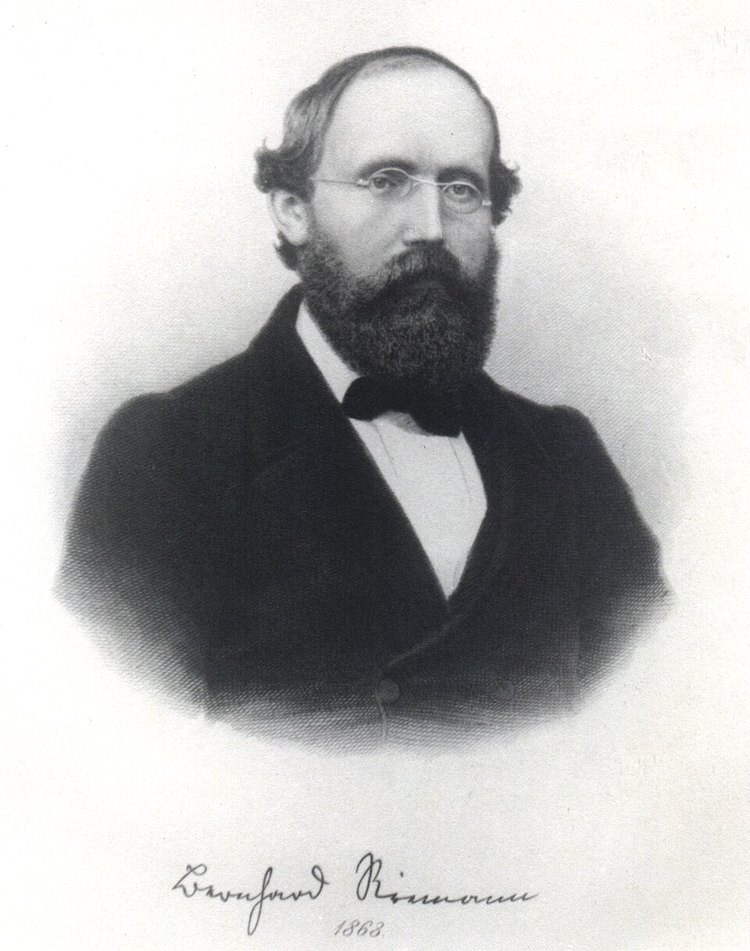
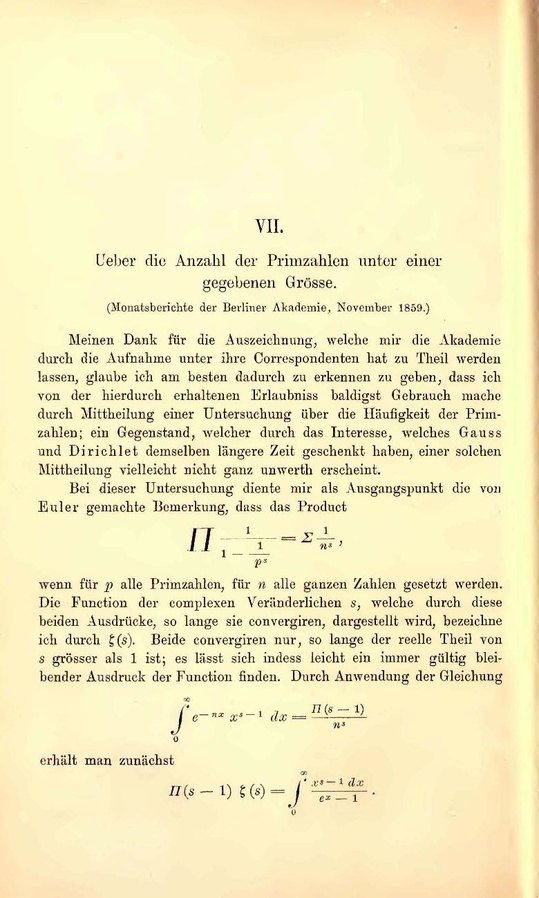
Riemann introduced the problem in 1859. For readers following the AI news, the key point is the scale of the claim: proving a statement for all relevant zeros requires a general argument. Computing many examples, however impressive, cannot establish that universal conclusion.
A successful build is only one part of verification
Formal mathematics has more than one possible point of failure. A project might compile while proving an unintended proposition. It might use a definition that quietly changes the question. The community’s certification addresses four separate requirements.
The intended statement
The target is Mathlib’s established definition of the Riemann Hypothesis, vetted by Lean and number theory specialists.
A reproducible build
Independent users compiled the submitted library and reproduced the raw proof export.
A matching conclusion
Statement-comparison tools checked that the theorem proved in the submission matches the intended Mathlib proposition.
An accepted proof
Multiple proof checkers examined the exported formal argument, providing checks beyond the original build.
Andrew Sutherland’s MIT verification record adds useful detail: 175,187 modules compiled without errors; the five main theorems use only propext, Classical.choice and Quot.sound. The record reports acceptance by nanoda and con-leche, and module-by-module acceptance by lean4lean.
The joint statement describes checks on an inert proof export. This matters because verifying an exported argument reduces dependence on what arbitrary source code might do while running. Individual audit logs remain snapshots of particular tools and runs; their status should be read in that context.
Claude helped construct the work. Proof checkers judged it.
Alpöge’s release note describes a collaboration in which he provided mathematical direction and Claude made substantial contributions. He portrays the model as moving beyond him near the end of the work. That account is evidence of Claude’s involvement, but it is not a detailed inventory of which participant originated every idea.
The public certification neither identifies a particular Claude model version nor allocates intellectual credit between the mathematician and the system. Those limits are worth preserving when describing the result: the proof is associated with a named mathematician, and the account of the collaboration comes from him.
Claude Code also helped operate Sutherland’s verification workflow. That is a different role from constructing the argument. In either case, the decisive correctness checks came from formal proof systems, rather than a model’s assessment of its own output.
Be precise about the generalized hypothesis
The headline verification includes the Riemann Hypothesis and results for Dirichlet L-functions. It should not be read as a blanket verification of every statement called a generalized Riemann hypothesis.
| Mathematical object | Reported scope |
|---|---|
| Riemann zeta function | Mathlib’s Riemann Hypothesis statement. |
| Dirichlet L-functions | All moduli and characters, including the usual primitive-character formulation. |
| Other L-functions | General Dedekind, Hecke and automorphic cases are outside the checked statements described here. |
This distinction keeps a major result from acquiring a broader meaning than its formal statements support. The precise theorem matters as much as the fact that a checker accepts a proof of it.
Correctness opens the door to understanding
A formal system can verify that a conclusion follows from specified definitions and axioms without producing a short explanation of why the argument works. At the scale of a 17-million-line library, that gap becomes a substantial research challenge.
Mathematicians will want to isolate the central ideas, find simpler routes through the argument and explain how the techniques connect to the rest of number theory. The community’s statement explicitly looks forward to that work. Alpöge’s own account also emphasizes understanding and communicating what has been produced.
For AI-assisted research, the broader lesson is a practical one: ambitious model output becomes far more useful when it can be turned into an artifact that others can inspect and independently check. Human direction, machine assistance and formal verification have distinct jobs. This result gives researchers a concrete reason to study how those jobs fit together.
The questions behind the headline
Has the formal Riemann Hypothesis proof been certified?
Yes. The November 21 statement from the Lean and Mathlib communities certifies both the formal statement and the proof. Understanding and explaining the mathematical ideas remain ongoing work.
Does this mean Claude solved it alone?
Alpöge describes a collaboration with Claude. The available certification does not establish that the model worked independently or specify how every contribution should be credited.
Does Lean checking replace mathematical review?
Formal checking establishes a precise kind of logical correctness. Mathematical exposition, evaluation of the ideas and any institutional recognition address additional questions.