
Subagents Only Make Sense in Three Measurable Cases, Anthropic Found.
Published · 4 min read
Anthropic compared one main agent loop with progressive disclosure against a single oversized prompt and a multi-subagent orchestrator. The loop won on quality in enterprise deployments, with lower cost and latency in most cases. Subagents still fit three situations: measurable context degradation, parallel work that needs a clean context, and tool or prompt conflicts. The practical rule is to build an eval set and fold one subagent at a time.
In this article
What Anthropic found
Anthropic's engineering post "Building agents: When to fold subagents into your main agent loop" makes a narrow point. One model, one context window, and one open-ended tool loop outperformed both a giant prompt and an orchestrated set of subagents. A clear system prompt, four or five thin data tools, and strict output guardrails covered most of the cases customers were building for.
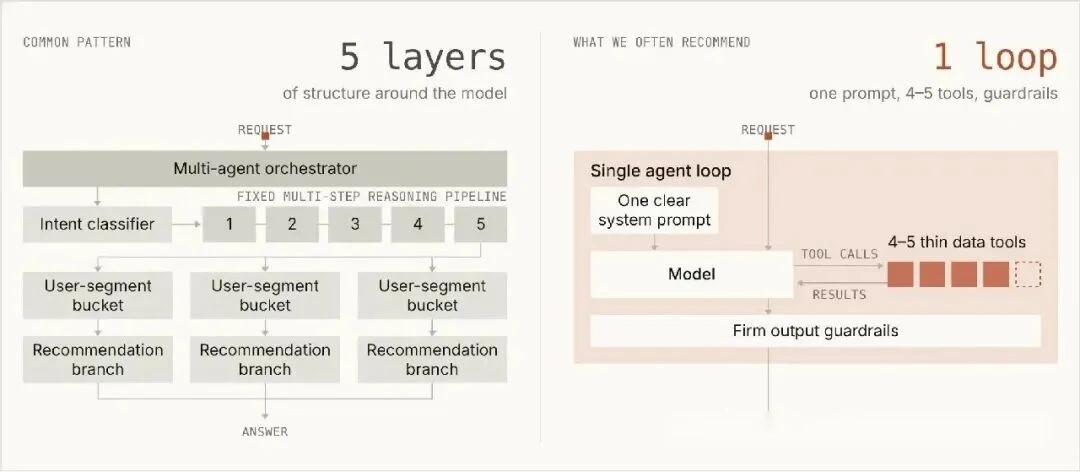
Why multi-agent org charts fail
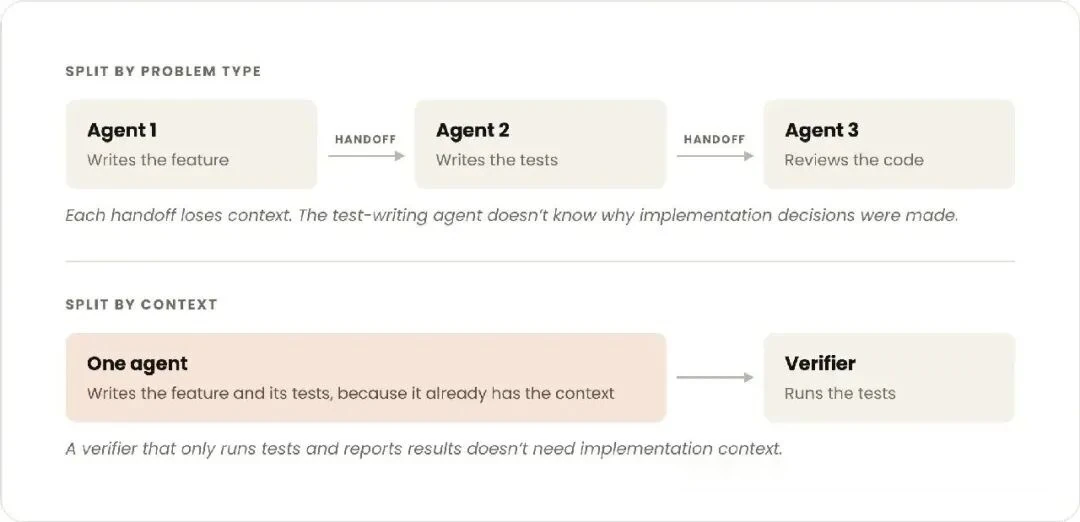
Teams usually mirror the org chart. Each product team ships an agent, and a central team adds an orchestrator on top. Five problems follow: handoffs lose context, subagents multiply without standards or owners, system prompts become a pile of conflicting rules, each team optimizes its own eval, and latency rises. One customer measured a single loop running about twice as fast as its multi-agent framework.
Anthropic calls it Conway's law for agents. The usual first draft includes an intent classifier, a fixed reasoning pipeline, user segments, recommendation branches, and an orchestrator. Customers often found the model did not need most of that. A customer service group with a dozen specialist subagents could not keep a consistent brand voice, and the extra latency hurt users.
How the single loop works
The harness does not plan. It enforces turn limits, cost limits, and a gate on write actions. Each turn, the model emits tool calls, the harness runs them in parallel, and the raw results go back to the same model. The model decides whether to call more tools, ask the user, or answer. The plan is written in the first turn and revised as results arrive. The model that writes the plan also executes it.
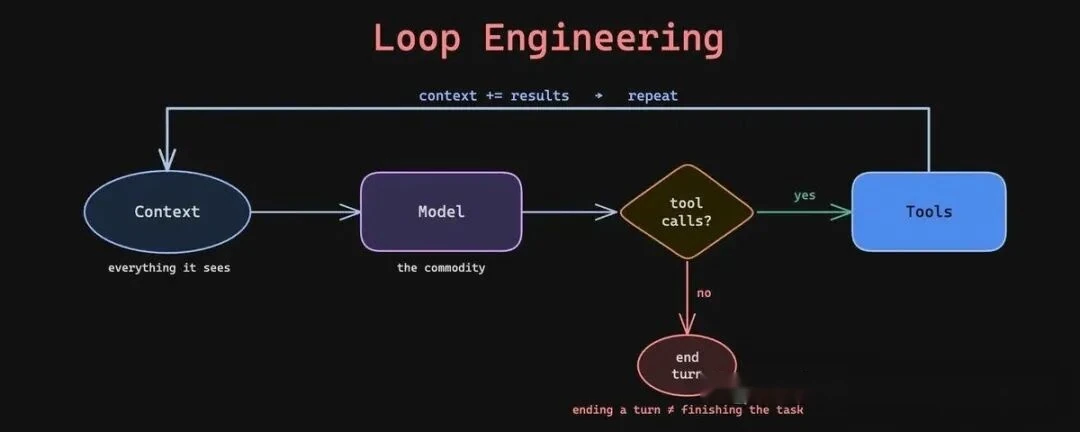
Progressive disclosure keeps the context manageable. Skills load in stages, and tools are discovered through a tool search. The agent sees short descriptions first and loads the full instructions or schema only when needed. Anthropic says this helped cut Claude Code's system prompt for stronger models by more than 80 percent. Shared context also produces better answers because the model can connect results across steps. Stronger models, starting with Opus 4.5, can hold more of the task and check their own work.
When subagents still help
Keep them in three cases:
- The single loop degrades measurably as context grows.
- Several tasks can run in parallel and each needs a clean, disposable context.
- One agent picks the wrong tools, or its system prompt has conflicting instructions.
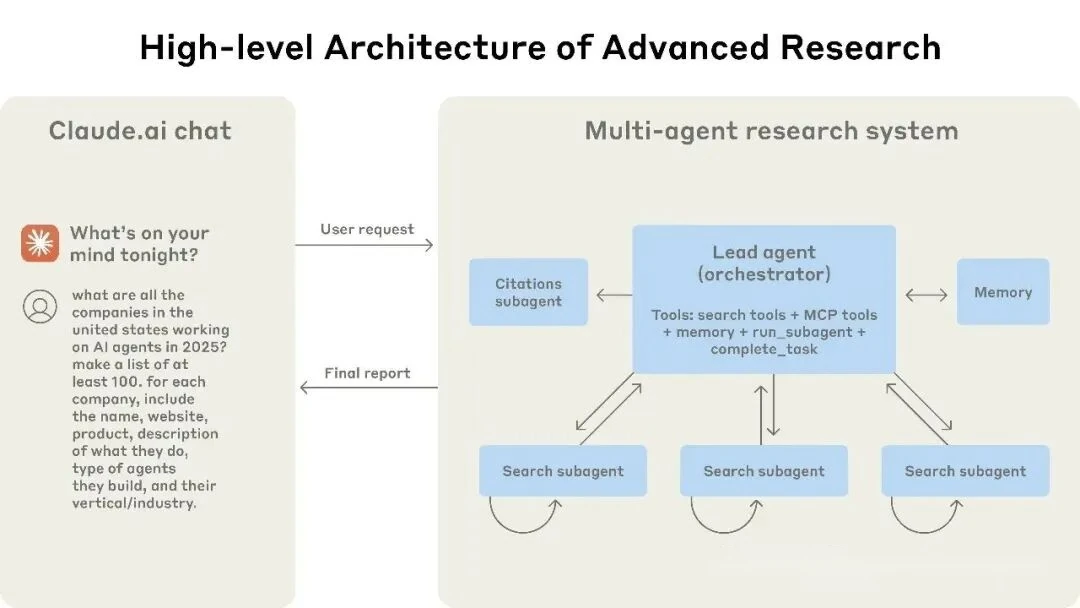
Research at the frontier also qualifies. Anthropic's own research system used a lead agent and search subagents, and the post treats that design as a fit for open-ended research rather than a default for product agents. The decision should come from an eval.
How to migrate
Start with an eval set. A central team owns the end-to-end set, and each skill gets a smaller one. Ten golden samples are enough to begin. Track routing accuracy while the orchestrator is still running. After a fold, check that the agent loads the right skill and calls the right tool.
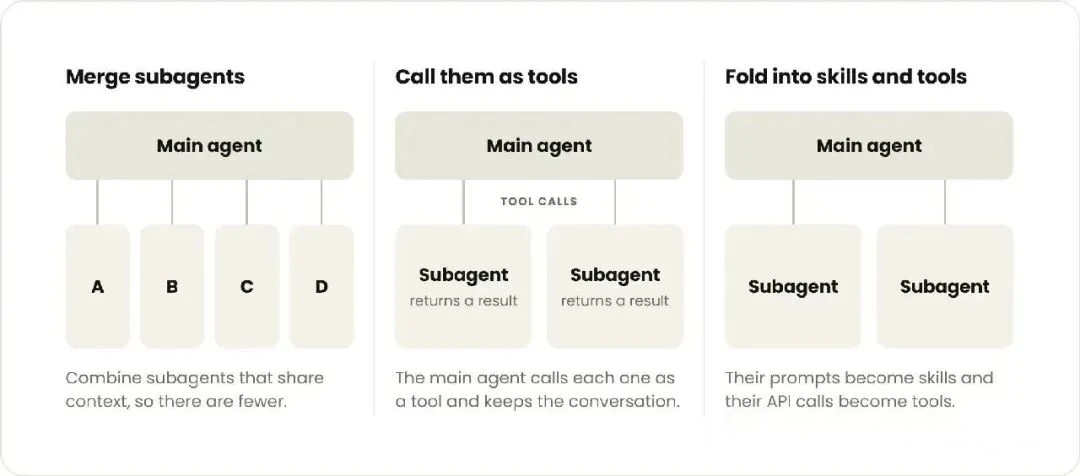
Fold in three steps: merge tightly coupled agents, call a retained subagent as a tool, and turn the prompt into a skill plus the API call into an MCP tool. Do one at a time and compare. Anthropic describes a customer service agent where folding cut latency but broke a passing flow. The main agent invented an answer instead of asking logistics to confirm the delivery date. The failure appeared in one of two runs, so each eval needs several runs.
Ownership moves from agents to skills and tools. Group tools by user intent, not one tool per API. Anthropic says tool selection degrades past 30 to 50 definitions in the system prompt.
What to take away
Measure first, change one thing, and keep what survives the eval. As models improve, more subagents can become skills and tools, but not all at once. Build a small eval, fold one subagent, and stop if the score drops.
A single loop puts more of the planning and tool selection on the model. If you are comparing model access for that kind of setup, SiAPI.ai lists current Coding Plan options and prepaid USD usage on its pricing page.
Source: Anthropic, "Building agents: When to fold subagents into your main agent loop," October 2026.